Health, Home & Family
 While there’s no distinct COVID-19 season like there is for the flu, it’s been shown that COVID-19 can peak during the winter months. To help fight respiratory illnesses, it’s recommended you get a flu vaccination, as well as the updated COVID-19 vaccine.
According to the Centers for Disease Control and Prevention (CDC), people six months and older, with rare exception, should get the updated annual flu vaccine, ideally by the end of Oct ober. The CDC also recommends that everyone ages six months and older should get the updated 2024–2025 COVID-19 vaccine, unless otherwise noted, to help restore and enhance protection against the currently circulating virus variants.
It’s especially important to protect certain populations. This includes those at increased risk of complications from severe flu or COVID-19 illness, such as adults 65 and older, people with certain immunocompromising or chronic medical conditions, infants, children younger than two and pregnant women.
“Preventive vaccinations are the best way to protect yourself and your family from seasonal illnesses,” said Dr. Sree Chaguturu, executive vice president and chief medical officer at CVS Health. “Access to preventive vaccinations is critical to keeping communities healthy.”
According to Dr. Chaguturu, it’s helpful to understand the science behind vaccines so people feel informed and safe getting vaccinated.
Myth #1: You should wait until flu season peaks to get vaccinated. Continue reading
 (NAPSI)—For more than half of her life, 43-year-old Megan Bettor dealt with bouts of excruciating low back pain. She doesn’t remember a specific accident or injury that caused the initial pain – all she knows is that it was a constant part of her life.
Megan’s pain was centered in her lower back and was aggravated by sitting, bending forward or with physical activity. For many years, she managed it with conservative treatments such as over-the-counter medications and physical therapy.
As the pain worsened, these treatments stopped working. When this interior designer and mom of two wasn’t busy, she often found herself spending weekends laying in bed unable to move due to her pain.
“There wasn’t just like a bad week,” said Megan. “It was every day, every morning [where it was] nearly impossible to get out of bed, brush my teeth and feed our dog.”
Megan knew something had to change and began exploring surgical options, including a disc replacement, an invasive and expensive treatment that may or may not address her pain.
That’s when she met Ramana Naidu, M.D., director of pain management, MarinHealth Medical Center and interventional pain physician and anesthesiologist. Dr. Naidu not only offered Megan a clear diagnosis of vertebrogenic pain but also a proven treatment. Continue reading
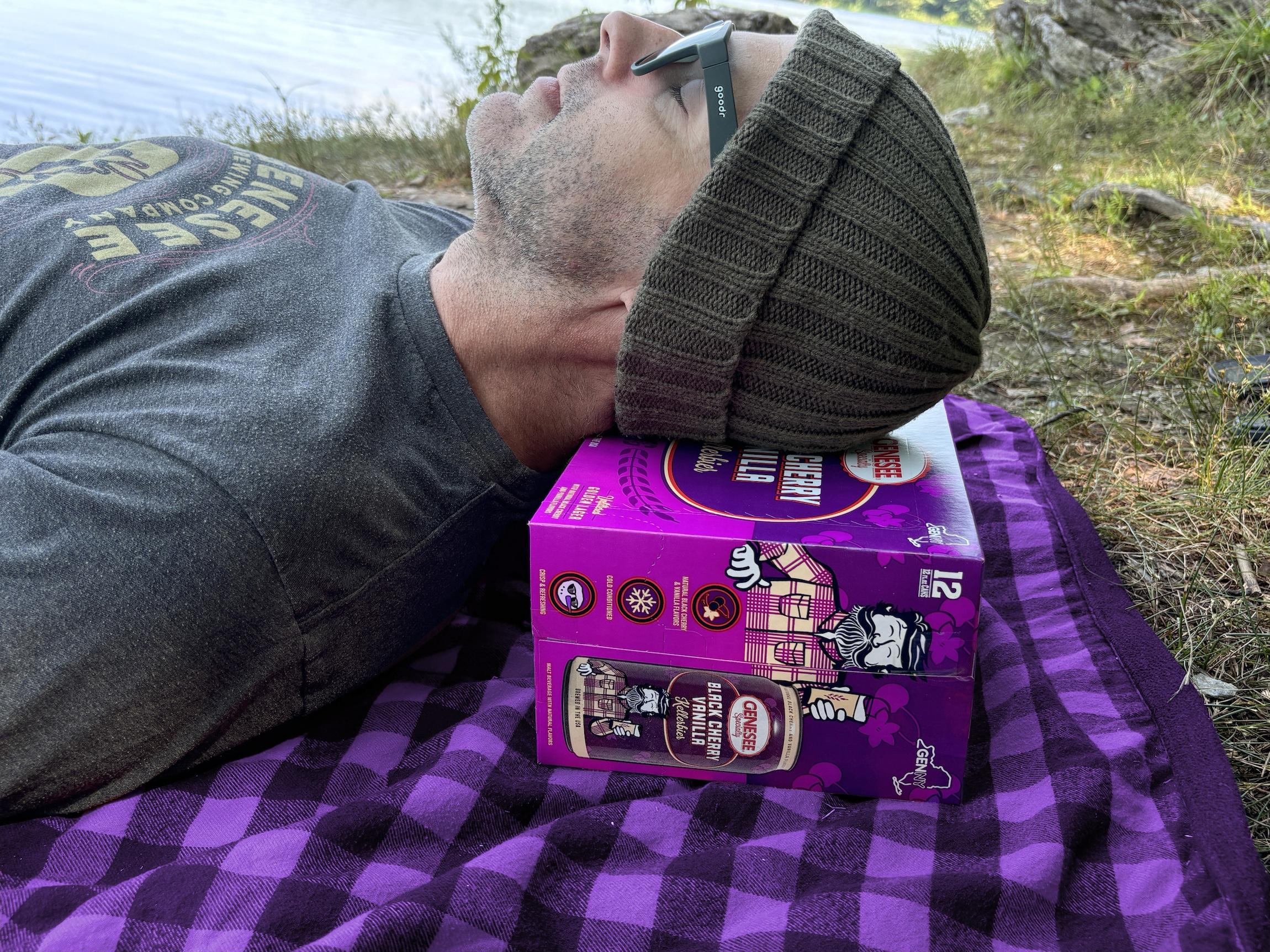 (NewsUSA) – It’s that time of year again! The time between summer and fall when some people start thinking about leaves and football, while others aren’t quite ready to trade in their flip-flops for flannel.
Join us in raising a glass to “sum-all” season! It’s the perfect time to enjoy the best of both worlds, blending the warmth of summer with the crispness of fall. Whether you’re clinging to those last beach days or eagerly anticipating cozy evenings by the fire, this season lets you do it all. So, grab your drink of choice, fire up the grill, and make the most of this special time of year.
Check out this sampling of sum-all favorites made at the Genesee Brewery in Upstate New York and available at select retailers across the U.S.
-Black Cherry flavor provides bridge to fall. Genesee Black Cherry Vanilla Kellerbier continues the Genesee tradition of releasing seasonal beers on the cusp between seasons. The Black Cherry Vanilla Kellerbier combines the tart sweetness of black cherry with a hint of smooth vanilla that is refreshing on a warm summer day and also a perfect complement to a brisk fall game day afternoon.
-Light beer wins through late summer. Labatt Blue Light Grapefruit, a summer seasonal beer, is perfectly suited to shift into fall and enjoy on the golf course. Continue reading
 (NewsUSA) – The average military family moves three times as often as their civilian peers, and most of these permanent change of station (PCS) moves occur during the summer, according to Blue Star Families, a nonprofit organization dedicated to empowering, supporting, and connecting military families in communities around the world.
Many military families live in their local civilian communities. However, military families whose lives are often disrupted by deployments and frequent moves often struggle to feel part of these communities, according to Blue Star Families’ 2023 Military Family Lifestyle Survey. Blue Star Welcome Week is a new American tradition spearheaded by Blue Star Families to create a greater sense of belonging and community for everyone.
Kathy Roth-Douquet, CEO of Blue Star Families, says, “It’s time for a new tradition where we make military families feel valued and included. Welcome Week connects military families with their civilian neighbors. Whether it’s a simple message or a community event, every gesture builds a stronger, more inclusive community. This is how we honor their sacrifices and show our gratitude.”
Blue Star Welcome Week happens every year during the last week of September – this year’s event is scheduled for September 21-29, 2024. Continue reading
 (NewsUSA) – Children can begin learning and participating in household duties as young as two. While handling the tasks yourself may be easier and less time-consuming, involving your children in the home can bring a sense of joy and togetherness, helping them gain confidence, a sense of accountability, and a deeper connection to their family members.
If you’re thinking, “But where do I start?” the key is in the approach and consistency. You must be as committed to your child’s role as they are. Here are a few tips to help create helpers in the home.
Keep it age appropriate. As a good rule of thumb, your child should be assigned one role or responsibility for each year of age. If they’re three years old, give them three tasks. Make sure the tasks fit their developmental level. If you make them too difficult, they could get frustrated along the way.
It’s all about learning and growth. If you keep this top of mind, you’re bound to be successful. Take the time to explain and demonstrate each task, then do the task with the child the first few times. After that, let them try it on their own. It won’t be perfect, but each attempt is a step towards independence. Set expectations with your child and be clear in your ask. Take each task one at a time to avoid overwhelming your child. Continue reading
 (NewsUSA) – The viruses that cause COVID-19 and flu continuously change or “mutate” to escape our natural immune responses and the protection provided by vaccines. As a result, for both flu and COVID-19, vaccination is not a “one and done” proposition.
Fortunately, as these viruses change, flu and COVID-19 vaccines are updated to protect the public against the variants that are currently circulating. Experts at Champions for Vaccine Education, Equity, and Progress (CVEEP)—a coalition dedicated to educating the public about vaccines and promoting equity and access—emphasize that the best way to reduce the risk of severe illness from both flu and COVID-19 is to stay up to date with recommended vaccinations.
Some viruses, such as those that cause measles and polio, change infrequently. This means that the vaccines for these viruses can provide immunity that is longer-lasting. By contrast, frequent changes in the viruses that cause COVID-19 and flu mean the protection provided by these vaccines will wane as new variants emerge. Continue reading
By Dr. David Sugerman
(NAPSI)—As a parent, I know that preparing for international travel with kids is more than just packing a suitcase. Whether we are visiting relatives we haven’t seen for a long time or helping our children see the world, we all can agree that protecting our family’s health is the top priority. As a doctor, I know that beyond sorting out missing socks and packing suitcases, there is another important step to prepare for international travel: measles vaccination. Your whole family needs to be protected by measles vaccination, including babies as young as six months old.
While the risk for measles in the U.S. remains thankfully low due to high rates of immunization, measles can occur anywhere in the world, and you can be exposed during international travel. Every year, U.S. residents who are unvaccinated get measles while traveling internationally and get sick after they come home, often spreading it to others. Measles is more than just a little rash; it’s a serious disease that can cause severe complications, especially in young children. Measles is also highly contagious. If one person has it, up to 9 out of 10 people nearby can become infected if they are not vaccinated. Continue reading
 (NAPSI)—If you’re like most homeowners, there’s probably a laundry list of major upgrades you’d like to make to improve the efficiency, performance, and functionality of your house. However, high upfront costs and project complexity can keep you from taking action, especially when projects involve expensive but essential systems, such as heating and cooling, water heater, and home envelope. Now, though, thanks to the Inflation Reduction Act (2022), there are numerous financial incentives that can significantly reduce the cost of these upgrades, making them more affordable and accessible, even for low- and middle-income households.
To help Americans take advantage of these financial opportunities and make these projects easier, ENERGY STAR recently launched a home improvement savings web tool. This handy online tool is a one-stop shop that lets you enter your ZIP code and find information on incentives available to you. Currently, it features generous tax credits and utility rebates that can help you substantially lower costs on qualifying products. Over time, it will include additional information on state energy efficiency rebates for low- and moderate-income households as they come online. Find the tool at: energystar.gov/homesavings. Continue reading
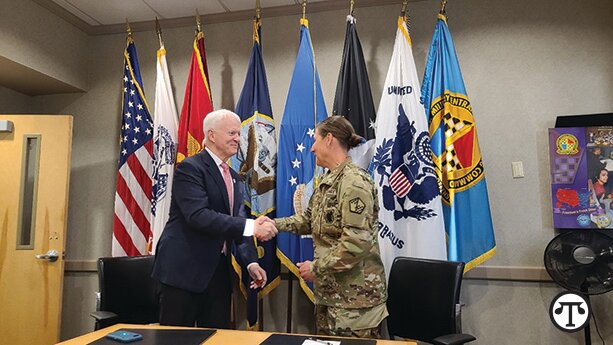 (NAPSI)—Good news for American military members and their families: A new program aims to provide emergency communications briefings to 100% of military recruits.
Command, signed a historic Memorandum of Understanding (MOU) to present the Red Cross Emergency Communication brief to all new military recruits.
What it Means
“For decades, the American Red Cross has provided services to applicants at Military Entrance Processing Stations throughout the nation,” said Colonel Megan B. Stallings, Commander, U.S. Military Entrance Processing Command. “At our stations, volunteers provide information that could be critical to applicants and families in an emergency. It was a pleasure to meet with Dr. Jordan and discuss our Memorandum of Understanding.”
The Red Cross traditionally has volunteers who go to a Military Processing Entrance Station (MEPS) and meet with recruits who have recently taken the oath of enlistment. The recruits are preparing to ship to basic training, based on their branch, all over the country.
“The MEPS command is committed to setting the expectation with all 66 MEPS stations to present the Red Cross brief to 100% of shippers,” said Dr. Michael Jordan, Vice President of Service to the Armed Forces and International Services at the American Red Cross. “It’s a bold and extraordinary commitment that will benefit all new recruits.” Continue reading
 (NAPSI)—Decades of helping writers and artists have resulted in the latest edition of L. Ron Hubbard presents Writers of the Future by the winners of the 40th annual Writers of the Future and the 35th annual Illustrators of the Future L. Ron Hubbard achievement awards.
The Winners
The grand prize winner for writing was Jack Nash for his story, “Son, Spirit, Snake,” which was illustrated by Pedro N. The grand prize-winning artist was Tyler Vail for illustrating writer John Eric Schleicher’s story, “Squiddy.”
Explained John Goodwin, President of Galaxy Press, “Our contests promote the arts welcoming diversity, ethnicity, creativity and equality, with no age limits, and blind judging. All are welcome to enter.”
The 26 winners hailed from all over the United States, Canada, China, Malaysia, The Netherlands, New Zealand and the United Kingdom.
About The Contests
Following the 1982 release of his internationally acclaimed bestselling science fiction novel, “Battlefield Earth,” L. Ron Hubbard created the Writers of the Future Contest (www.writersofthefuture.com) in 1983 to provide a means for aspiring writers of speculative fiction to get that much-needed break. Due to the success of the Writing Contest, the companion Illustrators of the Future Contest was created in 1988. Continue reading