Health, Home & Family
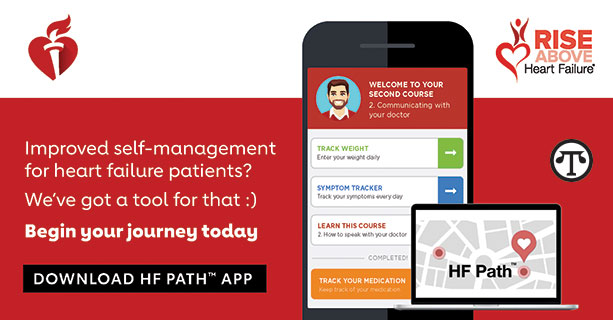 A study by the American Heart Association shows people with HF report spending more time on managing their condition; free app aims to make it easier
(NAPSI)—The American Heart Association, the world’s leading voluntary health organization dedicated to building healthier lives, free of cardiovascular diseases and stroke, shared this month that more heart failure patients and their caregivers report they are putting more effort into managing this complex condition. In 2015, just 55 percent of survey respondents said they were working harder to manage HF. The latest study shows a 14-point increase, with 69 percent now putting effort toward the important daily task of managing heart failure.
The AHA conducted its annual survey as part of the Rise Above Heart Failure initiative, nationally supported by Novartis Pharmaceuticals Corporation, and found that while those diagnosed with heart failure and their caregivers are spending more time and energy managing the disease, they are benefiting. These two groups showed an increased understanding of heart failure since the survey was last conducted. Continue reading
 (NAPSI)—Stroke is a leading cause of long-term disability—in fact, it’s even more disabling than it is fatal. The period following a stroke can be difficult for patients and their loved ones, as they grapple with the uncertainties of recovery.
For example, Sabrina Warren-White was a busy professional when a stroke in left her unable to speak or use her right side. She quickly began a rigorous rehabilitation program and can now speak, walk and use her right arm.
Doctor’s Advice
Once acute medical issues are resolved, focusing on rehabilitation is paramount to helping people build their strength, capabilities and confidence, said Dr. Larry B. Goldstein, the Ruth L. Works Professor and Chairman for the Department of Neurology and Co-director for the Kentucky Neuroscience Institute and KY Clinic at the University of Kentucky. Continue reading
 (NAPSI)—More than 30 million Americans have served in the United States Army. If you or someone you care about is among them, you can now order a personalized, commemorative brick that will be permanently placed along the pathway to the future National Museum of the United States Army.
Making a Museum
The National Army Museum is rapidly taking shape at Fort Belvoir, Virginia, just south of Washington, D.C. This national landmark will be the first museum to tell the entire history of the nation’s oldest and largest military service. The massive 185,000-square-foot building will display a collection of Army artifacts, historic documents, and Soldier artwork. The vast majority of these priceless selections have never been seen by the public.
“For those who served, the Museum will provide a place of reflection,” said retired Army Chief of Staff, General Gordon R. Sullivan, chairman of the Army Historical Foundation. “For the rest of America, it will be an educational institution that conveys American history through the eyes and stories of Soldiers, teaching our nation how the U.S. Army has shaped nearly every major event in our country’s history.” Continue reading
 Cracker Jack and Lane Loury getting used to each other. Lane is 18 months and is getting his second lesson from his mother Lindsay. Photo taken by Debbie Sykes, grandmother.
The NHLBI develops materials for patients and health professionals on many health topics, such as asthma, heart disease, and sickle cell anemia.
About our Materials
Publications include booklets, fact sheets, reports, DVDs and other formats. Materials are available to view online and some are available as printed copies. Information from the NHLBI is based on the latest scientific findings.
Resources for Health Consumers
These materials can help you or a loved one stay informed on the best practices to prevent, treat, and manage care. Many of our publications for patients are available in Spanish. Continue reading
(NAPSI)—Americans are living longer these days. The number of older adults is expected to reach 73 million by 2030.
With 30 percent of Americans serving in a caregiving role, it is important to remember that caring for a loved one can be both rewarding and difficult. Often, caregivers don’t know where to turn for advice and assistance. That’s where the Eldercare Locator—a program of the U.S. Administration on Aging and administered by the National Association of Area Agencies on Aging (n4a)—Comes in. By connecting older adults and their caregivers to local resources and support, the Eldercare Locator makes life a bit easier all around. The Eldercare Locator connects older adults and their caregivers to local services and supports across the spectrum of need, including in-home and community-based services, transportation and healthy aging.
What It Offers Continue reading
(NAPSI)—High blood pressure is often silent—showing no signs or symptoms—but it’s not invisible. Survivors are speaking out to show the real impact of high blood pressure, and a new campaign from the Ad Council, American Heart Association and American Medical Association provides resources to help you and your doctor create a treatment plan that works for you.
Survivors William, Jill, Francisco, Allyson and others show you what high blood pressure looks like while telling their stories at LowerYourHBP.org to encourage you to get your blood pressure under control before it’s too late.
Understanding High Blood Pressure Continue reading
By Blanca Taylor
Social Security Public Affairs Specialist
In 2018, more than a million people will be diagnosed with cancer around the world. This alarming statistic affects people and families everywhere. On June 3, 2018, we observe National Cancer Survivors Day in the United States. In support of this day, Social Security encourages getting checkups to provide early detection, raise awareness through education, and recognize the survivors who have gone through this battle or are still living with the disease.
Social Security supports people who are fighting cancer. We offer support to patients dealing with this disease through our disability program. People with certain cancers may be eligible for a Compassionate Allowance. Compassionate Allowances are cases where individuals have medical conditions so severe they obviously meet Social Security’s disability standards, allowing us to process the cases quickly with minimal medical information. Continue reading
Social Security Helps You Care for Seniors
By Blanca Taylor
Social Security Public Affairs Specialist
World Elder Abuse Awareness Day is June 15. This is an opportunity for everyone, all over the world, to voice their opposition to abuses inflicted on some of the most vulnerable members of our society. For more than 80 years, Social Security has provided for the elderly as part of our everyday mission.
Sometimes a family member is incapable of representing themselves due to health reasons. Generally, we look for family or friends to serve as representative payees. Social Security’s Representative Payment Program helps our beneficiaries who are incapable of managing their Social Security and Supplemental Security Income (SSI) payments. You can read more about the program at www.socialsecurity.gov/payee. Continue reading
By Blanca Taylor
Social Security Public Affairs Specialist

Senior Couple Walking With Pet Bulldog In Countryside
Retirement doesn’t have the same meaning for everyone. Some people plan to retire and never work again. Some people plan for second careers in occupations that wouldn’t have adequately supported their families, but they do the work for pure enjoyment. Some people, whether by design or desire, choose to work part-time or seasonally to supplement their retirement income.
Retirees (or survivors) who choose to receive Social Security benefits before they reach full retirement age (FRA) and continue to work have an earnings limit. In 2017, the annual earnings limit was $16,920 for those under FRA the entire calendar year. In 2018, it is $17,040. If you earn over the limit, we deduct $1 from your Social Security monthly benefit payment for every $2 you earn above the annual limit. Continue reading