Health, Home & Family
 (NAPSI)—For 30 million Americans, diabetes is an everyday reality. Diabetes can affect every decision, including what they eat, wear and do. Yet the 24/7 management of diabetes is often misunderstood, carrying a social burden, as too many Americans wrongfully assume the disease is the result of poor choices.
The American Diabetes Association is setting the record straight. Here’s what’s real and what’s not when it comes to diabetes:
Myth: Being overweight causes diabetes.
Fact: Being overweight is a risk factor for developing type 2 diabetes but it’s not the only one. Family history, ethnicity and age also play a significant role. In fact, people with type 2 diabetes are often at a normal weight or only moderately overweight.
Myth: Diabetes is caused by eating sugar.
Fact: Type 1 diabetes is a disease, in which the immune system attacks insulin-producing beta cells. Type 2 diabetes is caused by the body’s inability to use the insulin it produces and progresses so that less insulin is produced over time. Eating sugar doesn’t cause either type, though a diet high in calories can contribute to weight gain, which increases one’s risk of developing type 2 diabetes. Continue reading
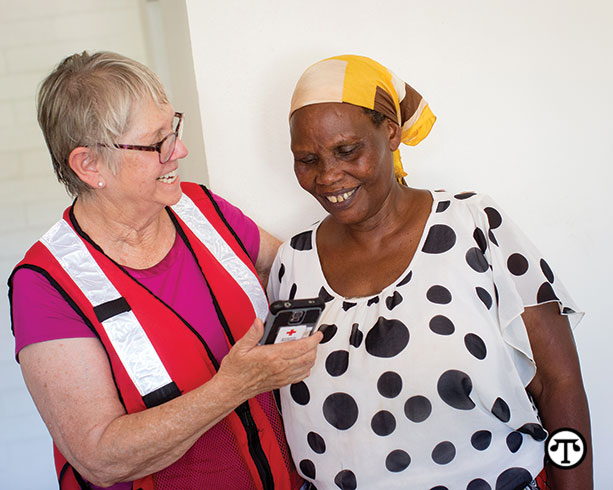 (NAPSI)—With all the sad stories of conflict and desperation from around the world, it can be heartening to hear of loved ones reunited.
Here are just two of the happy examples:
- Lydia spent months wondering if her daughter Odette was alive. Conflict in the Democratic Republic of the Congo forced Lydia to seek asylum in the U.S., leaving her far away from her family and with a heavy heart. With the help of the Red Cross, Lydia located her daughter and sent her a message through the Restoring Family Links (RFL) program. Odette responded to her mom—she was indeed alive. “I don’t know how the Red Cross managed to connect me with someone who I thought was dead. There was no other way for me to talk to her. There was no other way.”
- Conflict in Burundi forced Fidele to flee and lose touch with his loved ones, including his father. After living in Tucson, Arizona, for some time, he connected with the Red Cross RFL program to open up a search for his father to help give him peace of mind. After months of searching, Fidele finally received the welcome message: His father was alive and well.
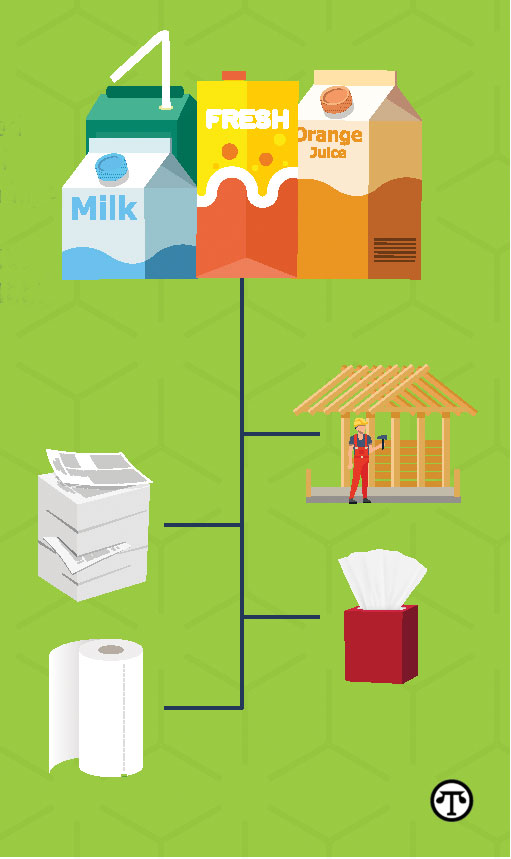 (NAPSI)—Recycling is one of the easiest ways the average person can help the environment. Not only does recycling prevent items from ending up in landfills, it reduces the amount of raw materials used to make new products. Here are some myths and facts about recycling commonly used food and beverage cartons:
Myth: Cartons can’t be recycled.
Fact: Cartons are certainly recyclable. They can be turned into new products, such as paper towels, tissues and writing paper. They can also be turned into environmentally friendly building materials, in a process that uses no water or chemicals.
Myth: If a package doesn’t have a recycling logo on it, it’s not recyclable.
Fact: What can and can’t be recycled varies by community and is primarily dependent on the recycling facility. Cartons can carry the standard “Please Recycle” logo under the Federal Trade Commission’s green guidelines. It’s best to contact your community or check its website to find out what can and can’t be recycled. Continue reading
 by Tom Charlier
(NAPSI)—Amid thousands of other runners at the St. Jude Memphis Marathon, James Eversull was determined to build on his story, though he has no memory of it.
It began in 1964, when Eversull, all of a year and a half old, became a patient at St. Jude Children’s Research Hospital, which had opened just two years earlier. Diagnosed with acute lymphoblastic leukemia—a virtual death sentence back then with a survival rate of only 4 percent—he was part of a group receiving a treatment regimen involving chemotherapy and radiation.
“They gave it to five of us, and I was the only survivor,” said the now-55-year-old Texan, who cites the experience as a reason for running the full marathon benefiting St. Jude. “Anything I can do to help kids is something I want to do. God saved me for a reason.” Continue reading
A friend sent me this poem and I thought it worth printing.
I have a list of people
All written in a book –
And every year at Christmas time
I go and take a look.
And that is when I realize
That those names are all a part –
Not of the book they’re written in
But of my very heart. Continue reading
American Stroke Association highlights importance of rehabilitation after a stroke this World Stroke Day
(NAPSI)—The American Heart Association/American Stroke Association, the world’s leading voluntary health organization devoted to fighting cardiovascular disease and stroke, wants stroke survivors to know that while life may be different after a stroke, rehabilitation can help them regain some independence, decrease chances of another stroke and provide new goals to work toward.
Worldwide, stroke is the No. 2 cause of death and is a leading cause of long-term disability. Stroke is more disabling than it is fatal. However, stroke is largely beatable through high-quality rehabilitation and patient support and implementation of the Association’s Rehabilitation Guidelines.
“Rehabilitation is key to recovery after stroke,” said Olajide Williams, M.D., chief of staff of Neurology, associate professor of Clinical Neurology Columbia University Medical Center and an American Stroke Association volunteer. “But up to a third of people who have a stroke do not participate in a rehab program.” Continue reading
 (NAPSI)—Medicare’s annual enrollment period is now underway, and runs from October 15 to December 7, 2018. You may be happy with your current Medicare coverage, but it pays to shop around. Here are a few things to keep in mind.
Don’t shy away from shopping. Plan details change each year, so the policy that was best for you in 2018 may not be your best option for 2019. Changes to premiums, deductibles and co-pays can be costly. An analysis of more than 17,000 people using Medicare.com to compare Medicare plans found that just 10 percent were enrolled in the lowest-cost plan for their prescription drug needs. Those who switched to a new drug plan stood to save an average of $611.
Watch for changes in drug coverage. Read any letters from your insurance company outlining changes in your prescription drug coverage. Insurance companies often tweak their formulary, or list of covered drugs, each year. That can mean higher out-of-pocket expenses for you. Compare coverage for your prescriptions under any new Medicare plan you consider. Continue reading
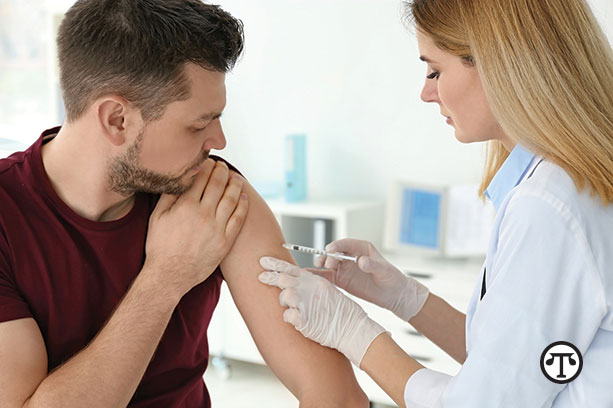 (NAPS)—The flu is nothing to sneeze at. According to the Centers for Disease Control and Prevention (CDC), influenza has resulted in between 9.2 million and 35.6 million illnesses annually since 2010. The best way to stay out of such statistics, the CDC says, is for everyone who is eligible and at least 6 months old to get a flu shot as soon as the vaccine becomes available.
To help, all CVS Pharmacy and MinuteClinic locations have the vaccine available seven days a week with no appointment needed.
Study Shows
That may be just as well, since the annual survey, conducted online by Harris Poll on behalf of CVS Pharmacy [1], found that two-thirds of those surveyed get a flu vaccine every year or plan to get one this year, a 5 percent increase from last year.
One reason so many are flocking to get the shot is the knowledge of last year’s flu season—which according to the CDC had flu levels that were the highest observed since 2009. Twenty-two percent of those surveyed[2] say that knowledge of last year’s severe flu season makes them more likely to get a flu shot this year. On a similar note, among the 27 percent of parents of children under 18 whose child did not get the flu vaccine last year, 26 percent say they are more likely to get their child vaccinated this year after learning about the notably high flu levels during last year’s flu season. Continue reading
Class II Recall 083-2018
Health Risk: Low
Sep 21, 2018
Congressional and Public Affairs
Autumn Canaday
(202) 720-9113
Press@fsis.usda.gov
WASHINGTON, Sept. 21, 2018 – Junior’s Smokehouse Processing Plant, an El Campo, Texas establishment, is recalling approximately 690 pounds of ready-to-eat teriyaki beef jerky products that may be contaminated with extraneous materials, specifically pieces of hard metal, the U.S. Department of Agriculture’s Food Safety and Inspection Service (FSIS) announced today.
The ready-to-eat teriyaki beef jerky items were produced on Aug. 9, 2018. The following products are subject to recall: Continue reading
 (NAPSI)—Whether changing the oil, replacing the wiper blades or checking the tires, finding the time to perform simple preventative vehicle maintenance is money in the bank.
According to research conducted by automotive market research firm IMR Inc., one out of three consumers who put off routine vehicle maintenance do so because they cannot find a convenient time. In addition, millennials and those who own older vehicles are more likely to delay routine maintenance.
Expert Advice
“There is an old adage that if you take care of your car, your car will take care of you,” said Rich White, executive director of the nonprofit Car Care Council. “Making time to perform routine auto care not only ensures a safer, more dependable vehicle, but car owners can preserve the trade-in value and save money by addressing small issues before they become more complicated, expensive repairs.” Continue reading