Health, Home & Family
 (NAPSI)—Imagine this: consuming a few small bites a day can help you manage your weight and reduce your risk of diabetes, gallstones, heart disease and cancer. It’s not some new miracle drug, it’s that long-time favorite of kids and adults alike—the peanut.
Large population studies show that small amounts of peanuts and peanut butter in your daily diet can help reduce the chances of developing a chronic disease. Peanuts are a superfood because just a small handful delivers 19 vitamins and minerals that contribute to your overall good health.
Here’s more good news. Peanuts are both tasty and versatile and you can enjoy them in a variety of delicious dishes that are easy enough to make any day but special enough for the holidays, such as this one:
Peanut Butter Sweet Potato Casserole with Peanut Streusel Topping
Prep time: 25
Cook time: 1 hour 30 mins
Total: 1 hour 55 minutes
Servings: 10 Continue reading
 (NAPSI)—Experts of all sorts now say face masks are a must to prevent the spread of COVID-19. Someone you meet could have the coronavirus and not realize it. Not all masks work equally well, however, researchers have discovered. Here are some of the most important features to look for when choosing a mask, according to the latest conclusions.
Mask Types and Filtering Effectiveness
When it comes to what types of masks are best, there are different levels of protection. A Lancet study shows 96% protection from N95 masks with single layer cloth masks offering as little as 5% protection. N95 masks are considered the best of the best but they may be hard to find because healthcare workers are the top priority due to their high exposure to COVID. Where does that leave you? Masks with an FDA 510k approved N95 substantial equivalent mask which passes and even exceeds all the FDA tests required for an N95 mask.
“There is no reason for consumers to have such a low level of protection with a cloth mask when N95 substantial equivalent masks are now becoming available in the 100s of millions and bring an average of 97% protection to consumers,” says COVID Educator and former TV Chief Medical correspondent Bob Arnot, MD.
“N95 and surgical masks are the most effective at preventing the spread of coronavirus—that’s why everyone should reserve them for healthcare workers,” adds Dr. Arnot. “The good news is, saving N95 masks for healthcare workers doesn’t leave you vulnerable: you just need to choose a mask that’s designed to deliver the protection and filtration properties of these masks.” Continue reading
Mimmi’s
Ocala Florida
My wife Phyllis and I were seated she ordered hot tea w/honey, extra lemon and a sandwich hoagy with Ham and Swiss and Parmesan melted over it with a sauce which she requested it on the side and a side of Cole Slaw. She said it was yummy!
I ordered get this I have liver once a year, it was on special so I had liver, onions, bacon, mushrooms, steamed Broccoli, spinach w/butter. I put some vinegar on the spinach. Coffee was hot and plentiful, I might order this two or three times a year.
—————————–
Harorum Korean BBQ
3045 SE 3rd Avenue
Ocala, FL 34471
352-622-1899
Don’t think you’re going to a real Korean BBQ with open flame table grills. This is a Convenience Store/Gas Station, with very small selection of Asian retail food products.
This is a Take-Out only, just like Chinese restaurants. Keep in mind Korean, Italian, Chinese or other restaurants have their own blend of spices, marinates and style of cooking. That’s why we prefer various restaurants for different reasons.
Harorum, provides FRESH made to order Korean favorites. The menu is limited, using quality meats, generous servings, tasty and fresh. We had Bulgogi, thin sliced, sweet marinated beef grilled with onions and garlic on white rice, included 2 Korean vegetable appetizers. I also purchased FRESH made Kemchi, nice mix of spices, not spicy, perfectly fermented with a nice crunch and good flavor. Overall a nice change for lunch or dinner and cravings for something different! Continue reading
A man who once claimed he could prove a federal conspiracy against Sheriff Joe Arpaio — and who collected more than $100,000 from the Maricopa County Sheriff’s Office before it determined his claims were baseless — is now a key figure in a right-wing vote fraud conspiracy theory being pushed by key supporters of President Donald Trump.
Media reports and conservative activists on social media say Dennis Montgomery has been spreading the claim that widespread voter fraud is the product of a deep-state supercomputer called “The Hammer” and software called “Scorecard.” According to the claims circulated online, those systems were allegedly used to alter ballot counts across the country.
The right-wing website American Report apparently helped launch the idea in a story it published Oct. 31. American Report features, among other things, extensive stories reiterating right-wing conspiracy theories from the Obama administration era.
The site said Montgomery claimed to have developed the HAMR, or Hammer, computer and the Scorecard software in the late 2000s, and that it was commandeered by the Obama administration and used to steal the 2012 election and is now being used to steal the election on Biden’s behalf.
The claim has been pushed by former Trump adviser Steve Bannon, former national security adviser Michael Flynn, Fox Business host Lou Dobbs and other high-profile allies in Trump’s orbit — though researchers have thoroughly debunked the idea.
 (NAPSI)—These days, it’s still essential for families to stay connected. The last months have been challenging. More than ever people need family and friends.
Modern technology has gone a long way to help. Skype and Zoom are marvelous tools but when the connection ends and the screen goes blank, what then? MyGrandKids, that’s what!
MyGrandKids, a wonderful, free application that allows everyone in the family to snap and share their moment—the special and everyday. Sharing and staying connected is one of the ways that will help all of us get through these difficult times.
My GrandKids lets you instantly share those moments and memories with family and friends over a secure private network. It’s the perfect organizer, that eliminates the frustration of searching for your favorite photos and videos of your grandchildren. With My GrandKids, there is no need going through emails, texts or posts, you go straight to them with one tap. And the great news is that it’s free and available at either Apple’s App Store or Google Play for Android devices. Continue reading
(NAPSI)—Over 61 million people are enrolled in Medicare. As of October 15, individuals age 65 and older can make changes to their coverage and enroll in a Medicare plan during the annual open enrollment period, which lasts until December 7.
During this time, consumers can change from one Medicare Advantage or prescription drug plan to another. If you’re already enrolled in original Medicare, you can switch to a private Medicare Advantage plan, or you can drop your existing Medicare Advantage plan to return to original Medicare.
Making sense of Medicare may not be easy for many and can often be overwhelming if you don’t know where to find information. In fact, nearly half (47%) of Americans don’t have familiarity with Medicare Advantage insurance, according to research from The Center for a Secure Retirement and Bankers Life.
How you enroll or switch Medicare plans may be different this year. Enrollment sometimes happens face-to-face where it’s easier to ask questions. However, whether you’re meeting in-person or virtually, you can familiarize yourself with the available options and make a more informed decision. Continue reading

Worried woman looking at computer screen
(NAPSI)—For the approximate 23 million women who balance caring for an aging parent with going to work, and often raising children of their own, there is little recognition and not enough support. These women themselves often don’t think of what they do as caregiving; they just consider themselves dutiful daughters. Yet they average 24.4 hours of unpaid care a week, from buying groceries, to managing medication, helping with household chores, assisting their parents with bathing and dressing, and driving to appointments. Many are even providing complex medical tasks, with little or no training, such as administering injections, monitoring vital signs, caring for wounds or cleaning feeding tubes. Collectively, they provide $470 billion in unpaid care, according to the AARP.
Often, these women provide this care at great cost to their careers. Working daughters, much like working mothers, may need to switch to a less demanding job, take time off or quit work altogether. They lose wages and job-related benefits costing them, on average, $304,000 in lost wages and benefits while spending nearly 20 percent of their own income on caregiving.
To give these unsung heroes recognition and much needed support, it’s important to make the care they give compatible with their careers. With 10,000 people turning 65 every day in the United States, the caregiving workforce is only going to grow. Smart businesses must examine policies and corporate cultures to create environments where caregivers can thrive. Working daughters need flexibility, paid family leave policies and expanding eligibility requirements. They need affordable, quality eldercare options.
Learn more at www.workingdaughter.com.
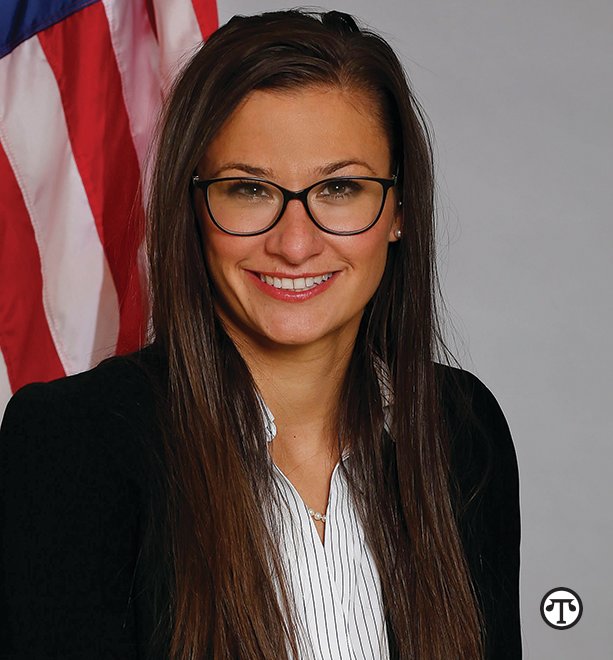 by Emily McGrath
(NAPSI)—If you have a job—or wish you did—or a child in school, a new way of looking at technology, education and the world of work may prove good news for you.
COVID-19 has deeply affected both the American workforce and higher education, with community college enrollment down nationwide. This poses a dire challenge, as community colleges serve as a critical pipeline in making universities and advanced fields accessible to a broader population, while also exposing students to new educational pathways across various industries. With enrollment down and workforce numbers at a tipping point, these institutions of opportunity need momentum to drive motivation back to where it was before the pandemic—starting with the next generation of diverse advanced manufacturing workers.
Thanks to explosive growth in such sectors as flexible hybrid electronics (FHE), in the next few years industry leaders will serve as intermediaries between technical fields of the future and the workforce that’s needed. Equipping community colleges with programs that serve this transition will help bolster a new American workforce, powered by advanced manufacturing and FHE and other technology. Increased demand for both awareness-boosting and skill-building programs will help drive technology development and subsequent commercial proliferation of FHE and the greater advanced manufacturing industry.
While the tech workforce hasn’t been immune to disruption from COVID-19, it remains a field expected to have one of the biggest demands for a skilled workforce in the future. The pandemic has temporarily reduced that workforce; there’s a promising future for advanced manufacturing in 2021 and beyond. Continue reading
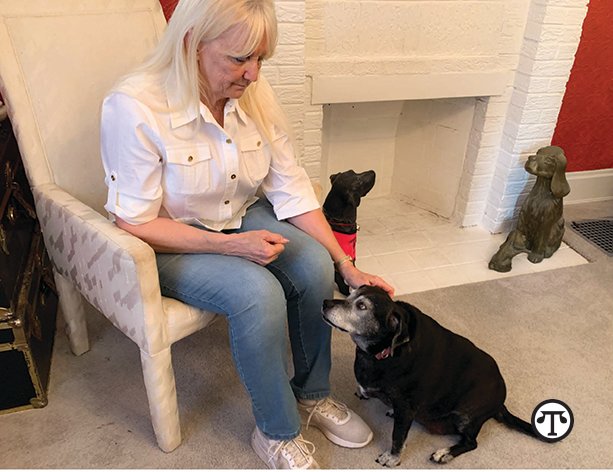 (NAPSI)—Many older Americans say they feel depressed—yet the majority of them are not planning to get help, according to a new national survey—though it could make a tremendous difference in their health and well-being.
With the onset of colder weather, fewer daylight hours, and the effect of the pandemic on holiday celebrations and traditions, more seniors than ever could be struggling with depression.
The GeneSight Mental Health Monitor reported that about two-thirds of adults 65 and older who are concerned they may be suffering from depression say they won’t seek treatment. That’s compared to fewer than half of adults over age 18. In addition, three in 10 of these older adults think “they can just snap out of it.”
“The ‘pull yourself up by your bootstraps’ mindset and reluctance to talk about mental health may be preventing seniors from getting the help they need,” said Dr. Mark Pollack, chief medical officer of Myriad Neuroscience, makers of the GeneSight test, a genetic measure that identifies potential gene-drug interactions for depression medication. “People seek treatment for conditions like heart disease, high blood pressure or diabetes. Depression is no different. It is an illness that can and should be treated.”
One GeneSight patient, Carmala Walgren, a 74-year-old resident of New York, agrees that depression should be treated regardless of age.
“There is such a stigma about depression among people my age,” said Walgren. “It is worth it to find treatment that helps you.” Continue reading
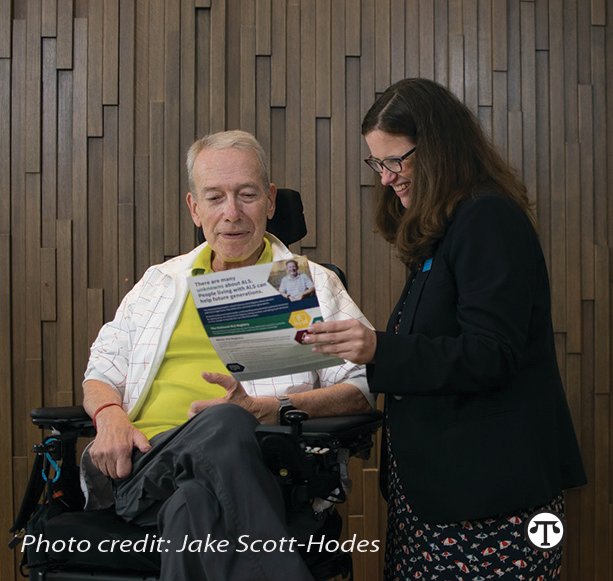 (NAPSI)—Amyotrophic lateral sclerosis (ALS) is a fatal neurological disease that attacks the nerve cells. It first gained national attention as Lou Gehrig’s disease, named after the famous baseball player who was diagnosed with ALS in 1939. To date, the cause of ALS is unknown, and there is still no known cure. The disease strikes quickly, usually leading to death within 2–5 years of diagnosis. But every person with ALS has an individual story, and understanding these stories will help researchers ultimately piece together clues about the disease.
Ed Tessaro was diagnosed with ALS in 2009. As he learned to cope with this diagnosis, he reflects, “I’ve never considered myself a victim of the disease, because I believe in my heart all of us have a wheelchair. In my case, it’s quite literal, but with everything that goes on in my life, I realize that every family has had a crisis.” One of the things that helps him and others with ALS is reaching out for community support and resources. “The ongoing struggle is to encourage newly diagnosed people to come in and talk about their condition. I want to help people learn about the National ALS Registry, clinical trials, and other resources that can provide support and hope.”
The National ALS Registry helps gather information from those who are living with this disease. Researchers from all around the world can access the Registry data to help scientists learn more about what causes this disease. Everyone’s story is different, and everyone’s piece of the puzzle is essential. The Registry has found that more than 16,000 people with ALS live in the United States. It is important to include as many people as possible living with the disease to get the most accurate information. When patients join, it helps give researchers more information. This could lead to a better understanding of the causes of ALS, because learning more about the disease is one step further in the battle to defeat it.
If you or someone you care about has ALS, consider learning more about the National ALS Registry by visiting: www.cdc.gov/als.