Seagrass Waterfront Restaurant
10386 W Hall River Road
Homosassa, FL 34448
352-503-2007
Beautiful setting on the river with three seating areas, climate controlled indoor, outdoor deck covered screened room and open air deck of the river. Practicing Covid-19 standards, temperature taken from all patrons, observing social distancing, with table and seating disinfecting after customer departure.
Upon arriving our party of eleven, was seated during two for one drink specials of beer, wine and cocktails, a great start to our dinner adventure!
Wide assortment of appetizers from calamari, loaded potato skins, wings, fried green beans, flat breads, crab bites and beef empanadas. Apps are perfect snack or to share while watching the boats on the river or docking to eat.
Light entrees or lunch favorites consists of hamburgers, chicken or fish burgers, Shrimp PoBoy, BBQ Pork, ham and cheese sandwiches. Must try their home made potato chips!
A well devised menu for everyone’s discriminating taste. I recommend having a dinner salad, generous for two to share (I didn’t). It consists of fresh lettuce mixed with romaine, sliced cucumbers, the freshest diced tomatoes and choice of dressings. Continue reading
This month, students will be returning to school in the tri-county area. During this pandemic, your child’s safety is our number one priority. Please take a few moments to review back-to-school safety with your child.
Walking To School
If your child walks to school, make sure there are sidewalks along the way. If you are not able to walk with your child, remember there is safety in numbers so have your child walk with siblings or other neighborhood children. Being hit by a car is by far the greatest threat to any child walking to school. Make sure your kids stay on the sidewalk and only cross at crosswalks. Remember to remind your children to never, ever stop to talk to strangers on the way to and from school and, most importantly, never to get into any vehicle with a stranger. These could potentially be life threatening situations.
Bicycle Safety
Children peddling to school on bicycles must wear bike helmets – it’s the law. Helmets are the single most effective devices for cyclists, greatly reducing the risk of death or critical injury. Your children should ride their bicycles on the right side of the road and obey stop signs and traffic signals. Continue reading
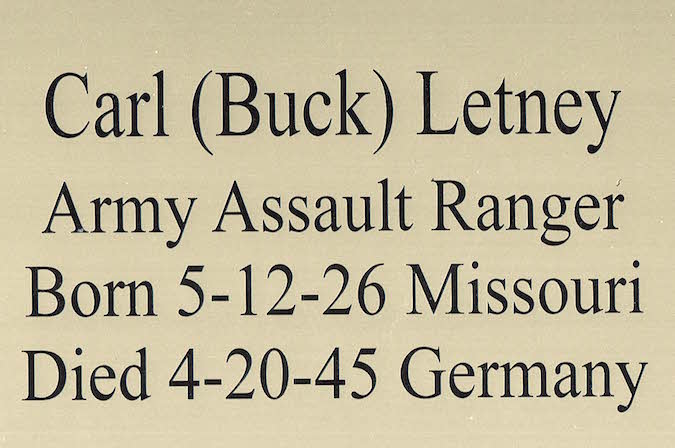
 “A Hero in World War II”
Carl was the youngest of twelve (12) children in his family. When Carl was eight years old the family still had a total of seven children, Carl being the youngest. The family moved to Waterloo, Iowa. Carl became an excellent athletic in both football and baseball in school. Carl Letney called Buck left his high school in his senior year to join the Army. He was trained to be an Assault Ranger and was sent to the Battle of the Rapido River where he fought for two days trying to cross the Rapido River (north of Naples, Italy) and reach the winter line. Buck Letney lost his life on the second day of fighting on the Rapido River. No gains had been made in the capture of the Rapido or Gari Rivers and they became one of the big defeats suffered by the US Army in World War II. The AMVETS Post 31 was dedicated to Carl’s memory and it is in Evansdale Iowa a small suburb of Waterloo where his statue and monument stands. Carls brother Jerry lives in the Villages.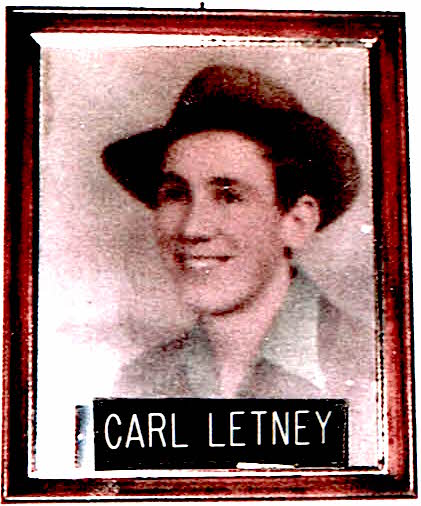
 About Leslie…
Hailing from Kansas City, she holds an MA from the Smithsonian in Decorative Art – 20th Century Historic Dress and BFA in Theater from California Institute of the Arts.
She worked for Christie’s Auction House in NYC for five years and then three years at Mahaffie Stagecoach Stop and Farm in Olathe, KS. She’s a YA writer and an active member of the Society of Children’s Book Writers and Illustrators.
Leslie is looking forward to getting involved in the community and taking advantage of all the fun activities Ocala has to offer.
(NAPSI)—Hurricane season officially runs through November, and while no one can predict what lies ahead, there are things you can do to prepare. Here, T-Mobile offers eight ways to stay connected.
1.Make a disaster kit: Include things such as batteries, snacks, water, a first aid kit, a flashlight and device chargers.
2.Update your family, friends and emergency services contact numbers. Make sure they’re saved and backed up in your devices AND written down someplace accessible.
3.Subscribe to official text alerts and connect with official social networks to learn about new developments before, during and after a disaster.
4.Keep your mobile devices fully charged. Have charging cables handy and consider picking up a car or portable charging device.
5.Protect your technology with waterproof re-sealable plastic bags.
6.Download emergency-assistance apps from the Red Cross and FEMA.
7.Make sure your phone supports Wireless Emergency Alerts and that you have enabled notifications on your device. Visit t-mobile.com/wea for details on how to set up alerts on T-Mobile and Sprint devices.
8.Set up Wi-Fi Calling on your phone if you have a phone that supports it. For Apple phones, go to Settings > Phone > Wi-Fi Calling; for Android phones, go to Settings > More Connection Settings > Wi-Fi Calling. Continue reading
(NAPSI)—As the summer months wind down, many will continue to flock outdoors and enjoy outdoor activities like hiking, camping, and fishing. What you may not realize is that despite the weather cooling off, ticks are still very prevalent outdoors.
It is important to check for ticks after spending time in the grass or garden, as ticks can transmit a bacterial infection known as Lyme disease.
The Disease
A bull’s-eye rash is one of the hallmarks of Lyme disease, but other symptoms can be non-specific and even overlap with symptoms of COVID-19. These include body aches, fever, breathlessness, eye pain, diarrhea, chest tightness, headache, fatigue or joint pain.
According to the Global Lyme Alliance, there are approximately 427,000 new cases of Lyme disease in the United States every year. However, Lyme disease is often missed—or misdiagnosed—due to unreliable testing. In fact, only 30% of people with early Lyme infections have a positive test result with existing tests because the disease is difficult to detect in its earliest stages, even though this is when it is easiest to treat.
If you suspect you have Lyme disease or have been recently diagnosed, you can be part of the solution to improve detection of the disease in others. Continue reading
(NAPSI)—As scientists are learning more about COVID-19 and how it affects the body, they are also looking for ways to support the innate immune response to infection. While more research is needed, preclinical studies lay a foundation of science to inform future human studies.
A recently published preclinical study focused on levels of a coenzyme called nicotinamide adenine dinucleotide (NAD+) in cells and animal tissue infected with coronavirus, specifically SARS-CoV-2 and lung tissue from a COVID-19 cadaver. The results revealed that NAD+ may play a key role in cellular defense mechanisms.
The researchers observed how SARS-CoV-2 impacted cellular NAD+ levels and how the virus triggered the infected cells to seek out a cellular nutrient called nicotinamide riboside (NR) in an attempt to replenish the NAD+ levels that had dropped due to infection.
In a separate set of experiments, the researchers provided NR to coronavirus infected mouse cells and showed that viral replication was significantly reduced compared to a control. Continue reading
(NAPSI)—If you or someone you know is a soldier, Army veteran, Army family member or other proud military supporter, you can become a permanent part of history at the National Museum of the United States Army.
An historic project led by the Army Historical Foundation and the U.S. Army, the Museum is going up at Fort Belvoir, Va., just south of Washington, D.C.
“We are proud to build a national museum that will tell the history of the Army—and our nation—through the eyes of American soldiers,” said Foundation President U.S. Army Retired Lt. Gen. Roger Schultz. “The timeline for opening the Museum was delayed because of the COVID-19 pandemic, but we promise it will be worth the wait.”
To be included in the Museum’s story, soldiers and Army veterans can submit their stories of service in the Registry of the American Soldier, which will be one of the largest collections of American Soldier profiles ever assembled. Stories can also be submitted on a veteran’s behalf, at no cost. The Foundation currently features the Registry on its website and the collection will be made available on kiosks in the Museum. Stories can be submitted at www.armyhistory.org/the-registries/.
Members of the Army community can also be a permanent part of the Museum by ordering a customized commemorative brick to be laid on the grounds of the Museum. More than 8,000 bricks have already been installed, honoring soldiers from all 50 states. Among the bricks are those for such well-known Army veterans as Senator Bob Dole and General Eric Shinseki. Individuals and organizations can order bricks at www.armyhistory.org/bricks.
To stay up to date on the project, including announcements about opening day, visit www.armyhistory.org.
(NAPSI)—With day-to-day activities affected by the coronavirus, many people greatly reduced their spending. While saving money is great, a solid financial plan is even better. Here are hints on how:
- Make a budget, but focus on the things that you can control. You can’t change your mortgage or rent payment overnight, but you can eat more meals at home.
- Clear the clutter, but keep the cash. You can use sites such as Declutter, Facebook Marketplace and Offer Up to profit from the things you no longer need.
- Simplify your subscriptions. Today there are subscriptions for everything from entertainment to plants. It’s easy to lose track of how much money you’re really spending. Make a list and do away with subscriptions you don’t fully use.
- Plan major purchases. If you’ll need a new dryer, roof or car, figure out how much it will cost so that you can start saving.
- Buy used or refurbished electronics. You can find great smartphones, laptops and other electronics in good condition on such sites as Gazelle, Swappa or eBay. Another tip for saving money is to use Upsie for the most affordable warranties for your electronics, appliances and more. Upsie also offers warranties that include accident protection for used devices.
Learn More
For further facts and tips, visit upsie.com.
OCALA, Fla.—The Florida Department of Health in Marion County wants Micanopy area residents to be aware that a bat in their area has tested positive for rabies. People who live or work in the area should maintain a heightened awareness that rabies is active in the area.
Residents and visitors are advised to take the following precautions:
– Avoid all contact with wildlife, particularly raccoons, bats, foxes, skunks, otters, bobcats and coyotes. Never adopt wild animals or bring them into your home.
Never handle unfamiliar animals (wild or domestic), even if they appear friendly.
– Do not feed or unintentionally attract wild animals with open garbage cans or trash.
– Keep rabies vaccinations up to date for all pets.
– Keep pets under direct supervision so they do not come into contact with wild animals.
– Prevent bats from entering living quarters or occupied spaces in homes, churches, schools, and other similar areas where they might encounter people and pets. Continue reading